Drain Cleaning in Bath Beach, Brooklyn
Sluggish sinks, bubbling toilet bowls, and water standing in shower basins are persistent headaches for Brooklyn homeowners. In Bath Beach, where multi-family brick dwellings and detached residences along Bath Avenue, Bay 20th Street, and 86th Street handle significant daily wastewater volume, aging drainage infrastructure is constantly tested. Grease, mineral scale, soap residue, and structural pipe deterioration cause blockages that household plungers cannot resolve. Professional drain cleaning clears obstructions completely, restoring smooth gravity drainage.
Recognizing Early Symptoms of Drain Blockages
Drain problems rarely happen without warning. Paying attention to early red flags allows you to address blockages before wastewater overflows onto floors:
- Slow Drainage: Water swirling sluggishly down kitchen sinks, tubs, or laundry basins indicates that cross-sectional pipe diameter has narrowed due to grease and scale accumulation.
- Foul Waste Odors: Decaying organic material, rotting food debris, and stagnant grease trapped inside waste arms emit noxious sewer odors through sink strainers and overflows.
- Gurgling Sounds: Air trapped behind an advancing drainage obstruction forces sewer gas bubbles through fixture water traps, creating distinct gurgling or glugging noises.
- Frequent Toilet Plunging: Toilets that consistently require forceful plunging after normal use usually suffer from obstructions lodged beyond the porcelain trap in the 3-inch or 4-inch soil branch.
The Science of Clogs: Grease, Hair, and Older Cast-Iron Pipe
Different drains suffer from distinct types of obstructions:
Kitchen Sink Waste Lines: Kitchen lines endure hot liquid fats, oils, and grease (FOG). As greasy dishwater travels down cool basement pipes, the fats solidify along the pipe walls, creating a sticky coating that traps coffee grounds and food particles.
Bathroom Tub and Shower Lines: Bath waste lines accumulate long strands of hair intertwined with soap scum and bath oils, forming dense fibrous plugs inside 1.5-inch and 2-inch drain traps.
Aging Cast-Iron Waste Stacks: In older Bath Beach homes, legacy cast iron suffers from internal rust tuberculation. Corrosion flakes expand to create a jagged, velcro-like interior surface that snags toilet paper and solids. Over time, heavy scale buildup chokes the pipe unless thoroughly cleared.
Snaking vs. Hydro Jetting: Choosing the Right Solution
We deploy commercial-grade mechanical tools matched to the severity and location of the stoppage:
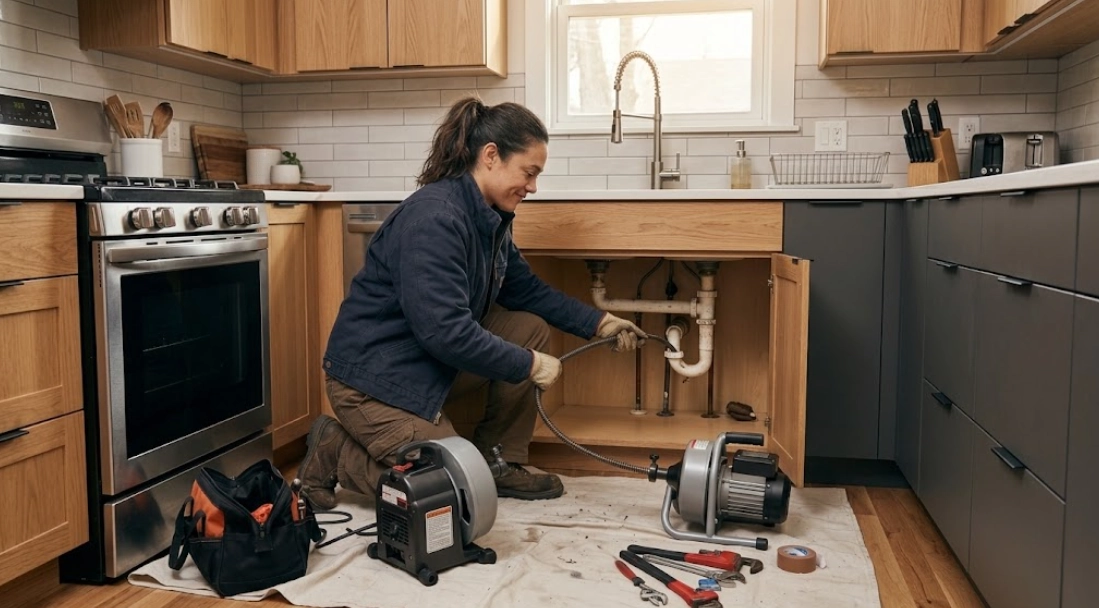
- Motorized Cable Augering (Snaking): Heavy-gauge sectional and drum machines drive rotating steel cables tipped with specialized root-cutting or bulb heads through the pipe. This method breaks apart dense clogs, cuts hair mats, and punches through solid blockages to restore immediate flow.
- High-Pressure Hydro Jetting: When waste lines are choked with heavy restaurant grease, commercial cooking residues, or decades of calcified sludge, snaking only punches a narrow hole that quickly reseals. Hydro jetting propels pressurized water streams (up to 3,500 PSI) through multi-directional nozzles, scrubbing pipe walls clean down to the bare metal without harsh chemicals.
When Drain Symptoms Indicate Main Sewer Issues
If clearing a branch line does not solve the problem, or if multiple fixtures across different rooms or floors back up simultaneously, the obstruction is located in the main house drain or street lateral. In these situations, our technicians deploy diagnostic video cameras to inspect the underground pipeline for root intrusion, offset joints, or pipe fractures, as detailed in our sewer line repair guide.
In low-lying coastal basements near Gravesend Bay, maintaining clean drains is also essential for flood mitigation and basement equipment safety. A backed-up drain can submerge basement burners and boiler controls, requiring emergency boiler repair in Bath Beach or pump protection via our sump pump and flood protection services. We also assist property owners with supporting fixture repairs, including toilet rebuilds, leaky faucet replacements, and trap repairs.
Frequently Asked Questions About Drain Cleaning
Chemical drain cleaners rely on caustic lye or acid that generates intense exothermic heat. In older Bath Beach homes with aging cast-iron or galvanized steel drainpipes, these chemicals eat away at deteriorating metal, weaken threaded joints, and melt plastic P-traps without fully dislodging compacted grease or root blockages.
Motorized snaking uses a heavy steel flexible cable with a cutting blade to pierce through an obstruction, boring a hole to restore initial flow. Hydro jetting uses high-pressure water streams (up to 3,500 PSI) delivered through specialized reverse-thrust nozzles to scour the entire inner pipe circumference, stripping away years of solidified kitchen grease and scale.
If only a single kitchen sink or bathroom lavatory drains slowly while other fixtures drain normally, the clog is localized within that fixture's branch line or trap. However, if using the washing machine causes water to erupt in the basement shower or running bathroom taps causes toilets to gurgle, the obstruction is in the building's main sewer line.
Over decades, the internal walls of cast-iron waste lines undergo tuberculation—a process where rust mounds and mineral scale accumulate. This creates a jagged, rough interior surface that snags hair, toilet paper, and kitchen grease, turning minor debris into chronic recurring blockages.